Do Patent Politics Matter?
Work in progress
My research centers on innovation law and policy, with a particular focus on whether and how intellectual property law affects incentives to create. I also conduct empirical studies of the legal system more broadly.
Work in progress
Working paper
What is the value of a patent term extension? We explore this question in the context of the TRIPS agreement, which patent holders up to three years of additional patent exclusivity, retroactively. We examine the market returns for public companies that benefited from this change. We find a small but significant effect, on the order of 3% in additional market capitalization for the average firm, as well as notable differences in sensitivity to patent extensions across industries.
118 Northwestern University Law Review 1277 (2024)
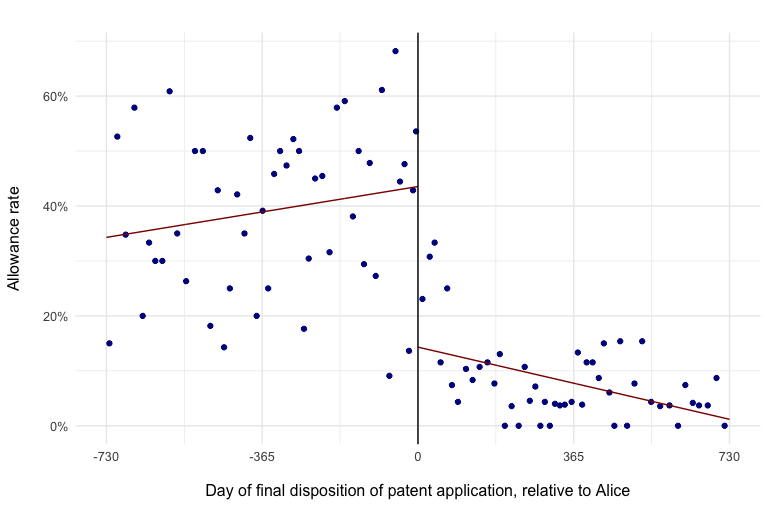
Are patents an important factor for venture capitalists making decisions about where to invest? Past research been unable to tease out the effect of the patent itself, distinct from the quality of the invention. I use a novel quasi-experiment to show that patents play no role in channeling investment amongst early-stage software startups.
17 Journal of Empirical Legal Studies 696 (2020)
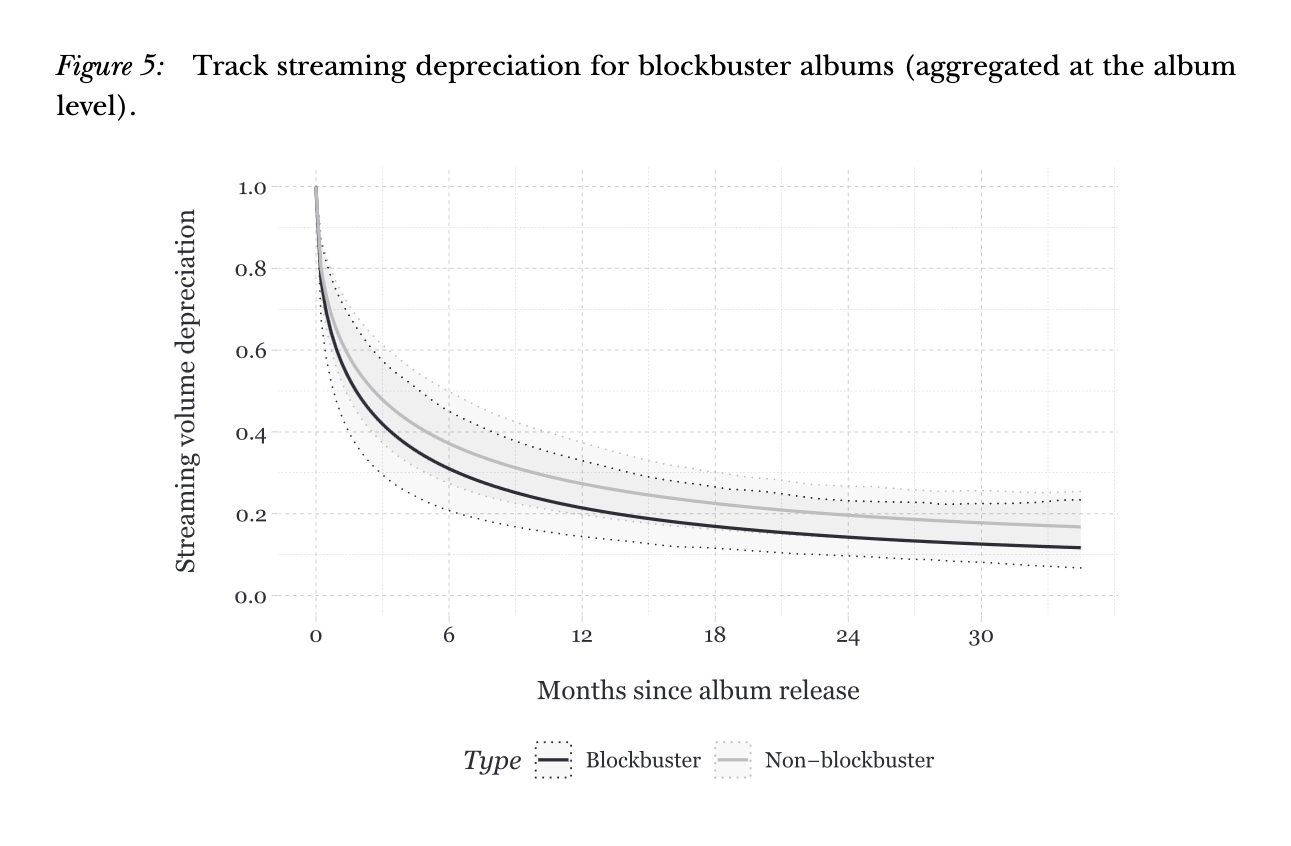
Copyright has a long term—the life of the author plus another seventy years. Does this align with the economic incentives of artists? Using data from the music industry, we find that the typical sound recording has a commercial viability on the order of months, rather than decades, and that decay rates are steep even for blockbuster songs.
Working paper
Much popular and academic attention has been given to the Supreme Court's certiorari decisions—the Court's choice about whether to hear a case. Prior scholarship has explored traditional factors like circuit splits, as well as the role of so-called “important cases”—cases whose importance is dictated by external events, shifts in political power, and changes in the Court’s personnel. We extend this work with a novel machine-learning-based method for evaluating and predicting the Court’s agenda-setting process.
98 Indiana Law Journal 125 (2022)
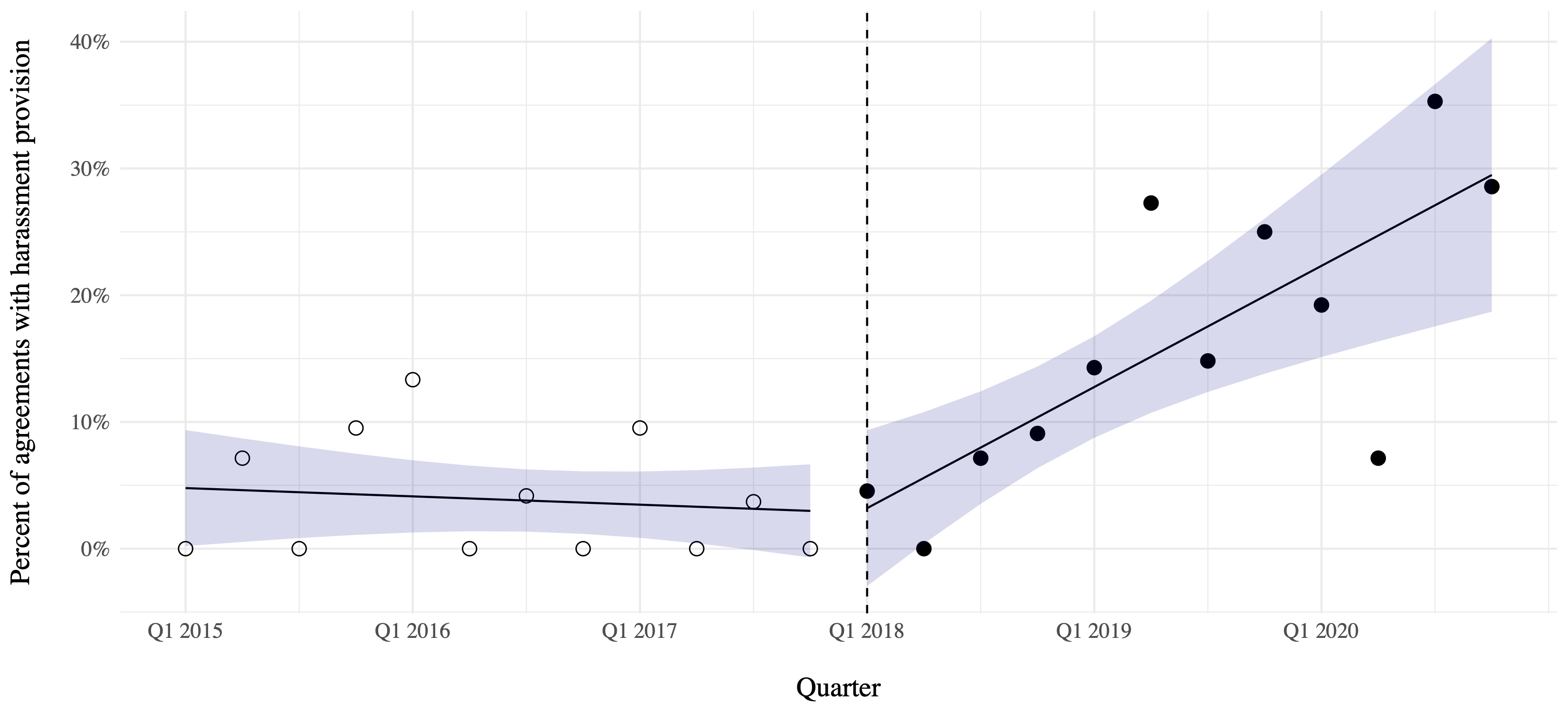
Are there lasting effects of MeToo at the top of corporate America? In the wake of the movement, we find a significant and growing rise in contractual provisions that allow companies to fire CEOs without severance payouts in cases of harassment or discrimination.
11 Harvard Business Law Review 113 (2021)
Public benefit corporations (“B-corps”) have received a lot of hype, but how do investors respond? We find that venture capital and private equity investors treat early-stage PBCs much like their traditional corporate peers.